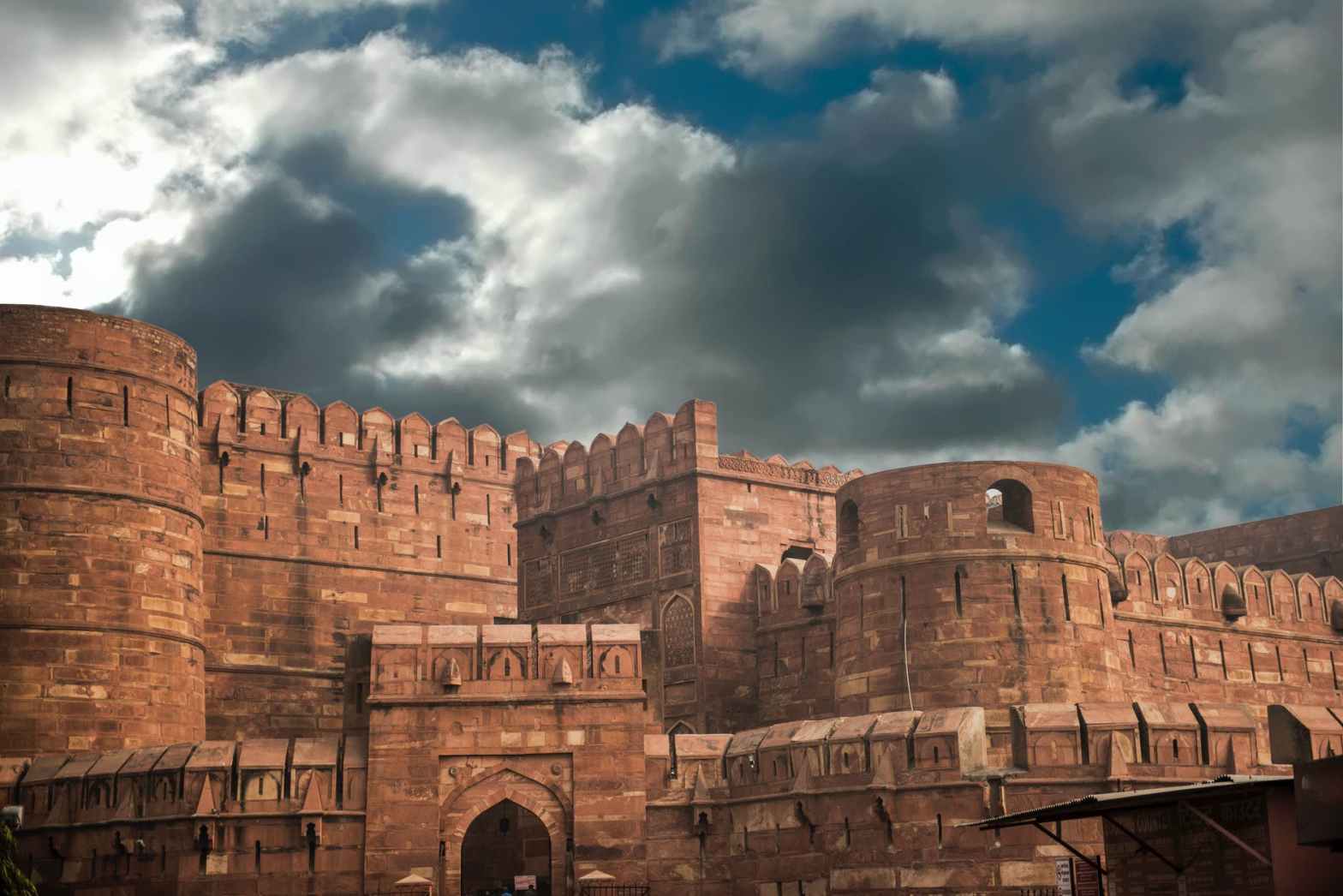
The Breach of Truth

Restoration is needed in the Church if she is to accomplish her end-time purpose.  This is certain to be done, but how it will be done, and who will be part of it, depends on how we individually respond to the Lord.  The Early Church rebuilt the temple of the Lord by the power of the Spirit and in the fullness of grace, as was prophesied by Zechariah (Zech. 4:6,7).  This was symbolized by the rebuilding of the temple in the days of Zerubbabel.  Then, during the time of Ezra and Nehemiah, the walls of the city had to be rebuilt and proper worship had to be restored.  The restoration that is needed today is revival of worship in spirit and truth, as well as a repairing of the city walls for protection.  In my article on “Repairers of the Breach”, I explained that repairing the gaps in the wall is restoring the ancient paths (Is. 58:12).  There are many breaches in the protective wall of the Church, so where do we start?  If we know which way the enemy is coming from, we can focus first on repairing the breaches on that side of the wall. 

Deception is a major assignment against believers in the end times (Matt. 24:4,24).  It is particularly important that we overcome deception because the New Jerusalem is to be called the City of Truth (Zech. 8:3).  How can we defend ourselves against this scheme of the enemy?  Paul’s words to the Thessalonians gives us insight on this: “because they did not receive the love of the truth” (2Thess. 2:10).  This is not just a knowledge of the truth, but an actual love for the truth.  Love is a matter of the heart.  David said: “Behold, You desire truth in the inward parts”. (Ps. 51:6).  Our words and actions issue from the heart (Matt. 15:18-19).  If the walls of protection are the paths we walk in, then it is reasonable to assume that we need to have the ancient paths written in our hearts.  When truth is lacking in any area of our lives, then deception can find a way through.  We can repair the breach in that area of the wall by loving the truth which God reveals.  Recognizing a breach in the wall is very important.  “If we say we have no sin, we deceive ourselves, and the truth is not in us.” (1Jn. 1:8).  If we lack truth in an area, we may have something else in its place, which we think is truth.  This is true for the individual believer and for the Church in general.  To repair it, we first need to submit to the correction of the Word.  We must receive the word of the Lord in humility (Jas. 1:21).  We must receive it with repentance and faith (Mark 1:15).

The word is a seed which must be planted in the soil of our heart (Lu. 84-15).  When I hear the word and believe it, it enters my heart.  If the soil is hard, then the word will not be received.  If the soil is soft, but there are hard stones in it, then these must be removed.  We are responsible for the condition of the soil.  Our heart becomes good soil when the hardness of sin is removed (Heb. 3:13).  “A broken and contrite heart – these, O God You will not despise.” (Ps. 51:17).  Pride will prevent you from receiving correction.  In an attitude of submission, let God search your heart to reveal any wrongful ways (Ps. 139:23-24).  This is a continual process, because even if the soil is good, it must be guarded from weeds.  Weeds are the cares of this world and the deceitfulness of riches (Matt. 13:22).  If you love the Lord, you will come to know Him, and you will recognize Him when He speaks (Jn. 10:2-5).  You will hold fast to His words, even if they are words of correction.  You will know the difference between good seeds and bad seeds because of the spirit behind the words.

While speaking of the deception of the last days, the Apostle John told the believers “But the anointing which you have received from Him abides in you, and you do not need that anyone teach you; but as the same anointing teaches you concerning all things, and is true, and is not a lie, and just as it has taught you, you will abide in Him.” (1Jn. 2:27).  This anointing is the indwelling presence of the Holy Spirit Who guides us into all truth (Jn. 16:13).  He speaks to us in various ways, but mostly through impressed thoughts.  I have come to recognize that voice as “the wisdom from above that is first pure, then peaceable, gentle, willing to yield, full of mercy and good fruits, without partiality and without hypocrisy.” (Jas. 3:17).  The Spirit behind these impressions is not “pushy”, but gentle.  His thoughts are pure, always agreeing with the Word.  If I do not see how they agree with scripture, I can ask for understanding because His wisdom is “easy to be intreated” (KJV).  Above all, His thoughts carry a sense of peace: “the peace of God, which surpasses all understanding, will guard your hearts and minds through Christ Jesus.” (Phil.4:7).  I can discern truth or error in what I hear through the presence or absence of the peace of God.  I have also found this “inner witness” to be a faithful judge of my thoughts and words.  When these are in line with His, there is a sense of peace, regardless of the circumstances. 

All of this requires that I first hear the words of truth.  If I do not hear the words, I cannot receive them.  That is why Jesus told the disciples, “He who has ears to hear, let him hear!” (Matt. 11:15).  It is important that I turn inward to the voice of the Lord by quieting my soul, as David said: “Surely I have calmed and quieted my soul.  Like a weaned child with his mother; like a weaned child is my soul within me.” (Ps. 131:2).  How did David do that?  “Lord, my heart is not haughty.  Neither do I concern myself with great matters, nor with things too profound for me.” (Ps. 131:1).   If I am anxious about things, my soul is not calm.  Anxiety is fear which is rooted in the pride of life.  I calm my soul by humbly casting all my cares on Him and turning my soul towards Him in adoration.  I desire spiritual understanding, but this is not obtained by natural effort (1Cor. 2:14).  I cannot discern God’s mysteries with my natural mind. I open my spirit to discernment and then my mind is enlightened.  I also need to be careful not to go beyond what is revealed.  I try to never conclude a matter until it is clearly revealed.  My confidence is not in knowing everything, but in knowing Him Who does.

In this first on repairing the breach of truth, we have focussed on the individual believer.  In the next article, we will focus on the Church in general.  Both are important because they are one. 

Repairers of the Breach

The watchman prophet stands on the wall and sounds the alarm when the enemy approaches.  The warrior intercessor stands in the gap and pleads the Lord to have mercy and deliver the city.  We must heed the voice of the prophets and we must respond to the Lord’s call for intercessors (Ezek. 22:30), but the Lord is also looking for those who will “go up into the gaps to build a wall for the house of Israel to stand in battle on the day of the Lord.”(Ezek. 13:5).  He calls these Repairers of the Breach (Is. 58:12).

How can the Church be ready for battle on the day of the Lord?  In the last article I talked about doing all to stand on the evil day (Eph. 6:13).  There is coming a time of “great tribulation such as has not been seen since the beginning of the world until this time, no, nor ever shall be.” (Matt. 24:21).  We must first realize that this evil day is not coming because the enemy is too strong for God to hold back.  No, it is so that we may have the final victory.  The nation of Israel took the promised land by battling the nations that came against them.  We must prepare for this evil day.  It will be a necessary time of refining and overcoming.  How can we prepare?  By rebuilding the wall of the City.  In ancient times, the wall of the city was for protection.

The Church is the New Jerusalem.  Like the Jews returning from the captivity, the New Testament Church has rebuilt the temple, but the wall of the City is still broken down.  We have obtained mercy, but our enemies still oppress us.  This is the report Nehemiah heard about Jerusalem after the temple had been rebuilt: “The survivors who are left from the captivity in the province are there in great distress and reproach.  The wall of Jerusalem is also broken down, and its gates are burned with fire.” (Neh. 1:3).  Nehemiah was so disturbed by this news that he fasted and prayed until God sent him to rebuild the wall of the city.  What was his strategy?  First, he surveyed the wall for himself (Neh. 2:12-16).  Then he called together the leaders and told them what God was calling them to do (Neh. 2:17-18).  Together they rebuilt the wall and the gates, while resisting the opposition of their enemies.

Let us look more closely at Isaiah Chapter 58 to gain an understanding of the spiritual meaning of rebuilding the wall.  The people say: “Why have we fasted, and You have not seen?” (vs. 3).  The Lord responds that even as they fast, they seek their own pleasures and act wickedly.  He tells them that the kind of fast He desires is to free the oppressed and to help the poor (vs. 6 – 10).  The result of them doing these good works will allow them to obtain the Lord’s guidance and provision (vs. 11).  They are to turn from seeking their own pleasures, and to delight themselves in the Lord (vs. 13-14).  He tells them that if they do this, they will enjoy a time of restoration (vs. 12).  What is to be restored?   “Those from among you shall build the old waste places; you shall raise up the foundations of many generations; and you shall be called the Repairer of the Breach, the Restorer of Streets to Dwell In.” (vs.12).  To repair the gaps in the wall is to restore the streets (or paths) to dwell in.  To repair the breach is to restore the ancient paths (Jer. 18:15).  If our actions are evil, the enemy will accuse us before the throne of God (Rev. 12:10).  If our actions are good, we will prosper, and the enemy will have no opportunity to harm us.  “If you are willing and obedient, you shall eat the good of the land; but if you refuse and rebel, you shall be devoured by the sword” (Isa. 1:19).

What are these ancient paths that need to be restored?   “If you carefully keep all these commandments which I command you to do—to love the Lord your God, to walk in all His ways, and to hold fast to Him—then the Lord will drive out all these nations from before you, and you will dispossess greater and mightier nations than yourselves.  Every place on which the sole of your foot treads shall be yours: from the wilderness and Lebanon, from the river, the River Euphrates, even to the Western Sea, shall be your territory.  No man shall be able to stand against you; the Lord your God will put the dread of you and the fear of you upon all the land where you tread, just as He has said to you.” (Deut. 11:22-25)  If we love the Lord, hold fast to Him, and walk in all His ways, we will not only protect the temple with a fortified wall, but we will go out of the gates and establish His kingdom in the land.  The temple represents our worship where the glory of God is manifested.  True worship, in Spirit and in truth, must be established, then it must be maintained by walking in these ancient paths.  When we fail to repair the breaches, our worship becomes compromised.  Worldliness sets in.  Then we go out of the city to evangelize, but there is no power because the presence of the Lord is not with us.   But when the Lord is with us, we can as Isaiah says, “Go through!  Go through the gates!  Prepare the way for the people; build up, build up the highway!  Take out the stones, lift up the banner for the people!” (Isa. 62:10).  Revival in the Church will result in salvation for the world.

How can we be Repairers of the Breach?  When we walk in the ways of the Lord and teach others to do the same, we repair the breaches in the wall.  Repairers of the Breach are those who have been healed and set free to become priests of the Lord, servants of God.  This is described in Isaiah Chapter 61 which Jesus quoted for His ministry: “The Spirit of the Lord is upon Me…”  After the people have heard the good news, been healed and set free, they become trees of righteousness (Isa. 61:1-3).  Then they rebuild, raise up, repair the ruined cities (Isa. 61:4).  They become servants of God. 

Some of the breaches in the wall are easy to recognize.  Only obedience in faith is required.  Other breaches are hidden from view.  For this reason, we need watchmen and intercessors.  They alert us to the tactics of the enemy, and they call upon God for mercy, as the ministers of God instruct the people in the ways of righteousness.  The breach is repaired when the people in the city walk in the ancient paths of the Lord.

Faith is Contagious

I do not like to challenge an animal who feels threatened, but neither do I believe in running away when I am threatened.  Living in north central Canada has provided me with more than one encounter with wild animals.  I can expect those in the wild, but not usually in the city.  A few days ago, I was walking with my wife along a walking path that we often take.  On the trail ahead of us we could see this dog without an owner.  As we approached, he started to bark loudly.  A little concerned that he may decide to attack, I suggested to my wife that we take a different path.  As we took a turn, the dog began to move quickly towards us, barking and growling menacingly.  That was enough!  I turned and pointed my finger at him and firmly said “No!”.  He stopped suddenly, all the while still barking.  In the same confidence, I said “Go home!”.  He turned, and in fear, turned and ran back along the trail and into the bushes.  Not knowing if continuing again along the same path would elicit another encounter, I asked my wife what she wanted to do.  Now you need to know that this was a German Shepherd, the same breed of dog that had attacked her as a child.  Bravely she said, “Let’s keep going.  He went home like you told him to”.  We did that, and there was no further confrontation.

If this had been the first time we had confronted an animal in this manner, she might have thought differently, but faith is contagious.  She had seen me confront a bear and, on two occasions, an elk in the same manner.  Whenever I have had to do this, it was with a confidence that God was with me.  I have learned to speak with authority to animals because God has given man dominion over animals, but I will not do this presumptuously.  I believe that these animals know they are dealing with God, not me.  That dog turned and ran like he had seen something terrifying.  I wonder if he saw my angel standing with me.  I do not exercise that kind of authority because I can, but because I must.  If I give in to fear, God cannot help me.  If I believe, all things are possible.

There are many examples in the Bible where faith was “caught”.  Take David’s mighty men for example.  When David faced Goliath as a boy, all of Israel’s army was fearful of a giant.  After witnessing David’s many victories of faith, other men rose in faith.  In 1Chronicles we read about Eleazar, one of the mighty men, who stood with his men against the Philistines in a barley field when the rest of the people fled (1Chron. 11:12-14).  There is another situation like this one where Shammah stood by himself against the Philistines in a field of lentils, when the rest of the people fled (1Sam. 23:11-12).  Which event occurred first I do not know, but it is obvious that one was encouraged by the other.  In both these situations, you can see that the issue was not the barley or the lentils, it was the welfare of the nation.  God helped Israel win great battles through men who took a stand in faith.

What kind of faith is this?  It is a faith like that of the centurion, who knew how to be “in” authority while “under” authority (Matt. 8:9).  It is difficult sometimes for me to know when to exercise authority by faith because I want to live a crucified life.  What simplifies it is when I see myself as a steward.  Because I have responsibilities, I can protect myself to fulfill those responsibilities.  I can also exercise faith to protect those in my care.  When I go for a hike in an area that may be bear territory, I take along bear spray and make noise to warn animals of my presence.  God has given them a place to live but He has not given them permission to harm His children.  If I see a wild animal before it sees me, I will go around it or turn back.  If the animal notices me, I speak soothingly to it, assuring it that I am not a threat.  If it begins to move towards me in an aggressive manner, I do not run away because it can outrun me.  Rather, I stand and take authority.  My confidence is that God has all authority in heaven and on earth and if I stand “under” His authority, He will defend me.  He has taught me this concerning evil spirits, and the animal kingdom is no different.

As we enter this end-time period of tribulations, we will see an increase in challenges from nature.  This is a time of warning for the Church and the world at large.  Will we blame God for the consequences of our sins, or will we repent and trust Him for deliverance?  The Lord told the Israelites that if they departed from Him, plagues and wild beasts would come upon them (Lev. 26:21-21).  We are in the days when God is bringing discipline to the Church.  Make it your aim to be reconciled with God and to believe His promises.  Tests of faith will come, but Jesus is praying that our faith will not fail.  After we have been tested, we are to strengthen our brothers (Lk. 22:32).

Helping People Grow

I was thinking the other day about how much of the work of a shepherd is done by the sheep themselves.  My son and his wife have a small farm where they are raising sheep.  It is interesting to watch how the ewes take care of their lambs.  I think there is a similarity in the Body of Christ.  As the Day of the Lord approaches, circumstances will change in the world which will make it more difficult for believers to meet publicly.  An essential part of the transition to those days has been the restoration of small group ministries in our churches.  These have taken various forms from cell groups to house churches.  An extension of this form of body ministry is the use of mentors to disciple believers. 

In the church we pastored the longest, we established a cell group structure which had the ability to develop leaders and disciple new believers.  Each cell group had a leader and a leader-in-training, who met with my wife and I on Sunday evenings.  All the members of the congregation were encouraged to belong to a cell group which met during the week in lieu of a mid-week service.  Discipling occurred in the cell groups.  New believers were assigned a “sponsor” who met with them regularly, as they worked through the New Believer’s Course.    We designed this course as a self-learning model, where the sponsor could answer any questions the learner would have.  The new convert was encouraged to join the cell group which the sponsor attended.

We could have easily taught the course in a class, but that did not fit our discipling model.  We did not want the church members to depend on the leaders to do all the ministry.  The role of ministers is to equip the believers so they can do the ministry.  We wanted new believers to become disciples and eventually cell group leaders or five-fold ministers.  The church members were taught to minister to one another in the cell groups.

The goal of the New Believers course is to establish a good spiritual foundation.  As Paul told the Corinthians, “no one can lay any foundation other than the one already laid, which is Jesus Christ.” (1Co. 3:11).  The way to do that, he had previously told them, was to know nothing among them except Jesus Christ and Him crucified.  He wanted to see them identified with the death of Christ and he wanted to see the manifested presence of Christ among them.  It was important that the faith of these new believers rested in God’s power, not in man’s wisdom (1Co. 2:1-5).  Likewise, the role of the mentor is to establish the new believers in the Lord.  This course will introduce them to spiritual concepts, but it is not necessary in the beginning to expound largely on them.  Rather, it is important to help them make the right choices and to put their trust in the Lord.  Remember, the Lord started His ministry by preaching the gospel and saying: “The Kingdom of God is near.  Repent and believe the good news!” (Mk. 1:15).  Mentors must pray with them and teach them by example.

In the early Church, the believers were added to the Lord (Acts 5:14), and He added them to the Church (Acts 2:47).  The spiritual home that the new believers are to become established in is very important.  It should be one where the Lord’s presence is manifested, and His will is done.  It need not be a large church.  When we started to lay a vision for cell groups, the Lord instructed us to first develop the pattern for the meetings.  This was to be “Jesus in the midst of us”.  We pursued revival, not cell groups.  As the group grew larger, and we were compelled to divide into smaller groups, the Lord instructed us to divide according to leaders, not numbers.  The emphasis in the beginning was to build the model, and to train leaders who would do the same. 

Although our little church had lot of good features, it was not all that it needed to be.  There was still a great need for spiritual maturity and for the manifestations of the Spirit of God.  The Early Church grew quickly and powerfully because of prayer and fellowship, and because of the teaching of the apostles with the manifestation of signs and wonders (Acts 2:41-43).  The Church today must be restored to the New Testament model.  It must be an Apostolic Church.  I will say more about that in a future article.

At the end of this article, I will include a link to the New Believers Course we developed.  You are permitted to make copies for personal use.  To use this material as a mentor, I suggest you become familiar with it.  Read also the articles on the Eight Steps to Spiritual Maturity. 

Here is a link to the New Believers Course on Google Drive.

https://drive.google.com/drive/folders/1x8phpcOW8K1HT7GC4ss9sSjl7IB1yct2?usp=sharing

The Remnant

Isaiah was a prophet to the nation of Israel before she was led into captivity because of her rebellion.  He described her condition as: “The whole head is sick, and the whole heart faints.  From the sole of the foot even to the head, there is no soundness in it…” (Is. 1:5-6).  When I came to the Lord in the early seventies, I read of the Church being described by these verses.  Ministers like Leonard Ravenhill were crying out for a much-needed revival.  Isaiah said that “unless the Lord of hosts had left us a very small remnant, we would have become like Sodom, we would have been made like Gomorrah.” (Is. 1:9).  Even today there is a remnant of Jews in the world.  Paul tells us that in the end times the whole nation of Israel will be saved through this remnant (Ro. 11:26).  There is a parallel between the nation of Israel and the Church.  In my recent article, A High calling, I explained that not all who believe in Jesus for the forgiveness of sin will become His Bride.  There is coming a judgment for the Church and, just like for the nation of Israel, the Lord has reserved a remnant in the Church “who have not bowed the knee to Baal” (Ro. 11:4).  Just like the remnant of Israel will result in the whole nation being saved, the remnant of the Church will result in the whole Body of Christ to become the Bride.  Does that mean that all the people in Israel will be saved?  No, the nation in general will accept Jesus as the Christ but those who reject Him will be removed.  In the same manner, the Church on earth will go on to maturity and those who resist will be removed.  She will become a “glorious church, not having spot or wrinkle or any such thing” (Eph. 5:27). 

The purpose of the remnant is to preserve the whole.  This is the principle the Lord explained to Abraham when He was about to destroy Sodom and Gomorrah (Gen. 18:23-32).  Had there been ten righteous, the Lord would not have destroyed the city.  It is the remnant that allows the nation to survive, but it is not preserved without correction.  We must not look upon the remnant as a select group who will be taken out, but as a special people who will be a cause of salvation to the others.  The promise to Abraham was that He would multiply his descendants so much that they could not be counted (Gen. 15:5; 16:10).  Those who believe are the children of promise (Ro. 9:8), and we are to be a great multitude.  Consider the vine when she is pruned.  After the pruning she looks like she has been reduced to very little.  It is not to make her small that she is pruned.  It is to enlarge her fruitfulness.  After a time, she comes back to full strength bearing more than before.

In the book The Call, published in 1999, Rick Joyner shares a vision of the Church as an army comprised of three groups.  The first group was a vanguard with twelve divisions.  This group was disciplined, selfless and very powerful.  The land before the army was dry and dusty but after this first group passed over it, life had come to the land.  It was green with new vegetation.  A second group followed which was much larger than the first group.  It had less discipline and was marked by selfish ambition in the leaders.  When these believers passed over after the first group, they left buildings and bridges; but the land was less green, and the streams were a little muddied.  A third group followed which was much larger than the other two groups combined.  This part of the army moved erratically and could not keep up to the first two groups.  They were occupied with in-fighting.  All the believers in this third group were given to selfishness.  When they passed over the land, the grass was trampled, the trees were stripped, the streams were polluted, the bridges were destroyed, and the buildings were left in shambles.  In the vision, the Lord was very angry with this third group and the author asked why He did not just drive them away from the army.  The Lord’s response was that most of the Church at that time was in that third group, but in a time to come, He would stop the march and discipline the selfishness of the third group and the ambition of the second group.  Here is a quote from page 148: “Before the last great battle, My army will be holy, even as I am holy.  I will remove those who are not circumcised of heart and the leaders who do not uphold My righteousness.  When the last battle is fought, there will be no third group as you see here.” The transformation of the second and third group did not happen by itself.  When the army was camped, the time was spent in training.  Some from the third group became part of the second group and some from the second group became part of the first group.

It is important that we see the Church as Christ sees her.  She is not just a remnant; she is a nation.  She is not fully mature, but Christ is sanctifying her, cleansing her “with the washing of water by the word” (Eph. 5:24).  Are you part of the remnant?  “Take heed to yourself, and to the doctrine.  Continue in them, for in doing this you will save both yourself and those who hear you.” (1Tim. 4:16). 

Preparing the Way of the Lord (Updated February 2026)

There is a voice crying in the wilderness, “Prepare the way of the Lord; make straight in the desert a highway for our God” (Isa. 40:3).  Before the First Coming of the Lord, John the Baptist was such a voice.  He cleared the way for the people to receive the Messiah by preaching a message of repentance.  It was necessary for the hearts of the people to be pure to recognize Jesus as the Saviour.  We are living in a day where that voice is crying out again through multiple people to make ready a people for the Second Coming of the Lord.  It is more than a message of salvation; it is a call for the Bride to make herself ready for her Bridegroom.

Understanding the destination of this highway is important because it helps us to hold fast to the path.  “And the ransomed of the Lord will return, and come with joyful shouting to Zion.” (Isa. 35:10).  Scripture can often be interpreted at different levels.  In a physical sense, this was a promise to Israel that she would return from captivity to Jerusalem, the holy city on Mount Zion.  In a spiritual sense, it speaks of “the holy city, New Jerusalem, coming down out of heaven from God, prepared as a bride adorned for her husband.” (Rev. 21:2 NKJV).  The highway is a journey of becoming; we are living stones being built into a spiritual house for God (1Pe. 2:5).  When the Lord returns to complete our redemption, we will see what He has accomplished in us.  “We know that, when He appears, we shall be like Him, because we shall see Him just as He is.  And everyone who has this hope fixed on Him purifies himself, just as He is pure.” (1Jn. 3:2,3).  We are saved to a holy calling (2Tim. 1:9), to be a holy nation, a special people for God (1Pe. 2:9).  Too often we preach a self-centered gospel.  We make it all about the believer, but God has a special purpose for us as a nation.  We are individually precious to God as part of something bigger.  We have a corporate purpose.  He is building an eternal dwelling place to manifest His glory.  To do this, the Lord is bringing individual Christians to maturity, and He is bringing the corporate body to maturity.  The messages in these blogs are to assist in making straight a way for Christians to become the Bride that will reign with the Lord over all creation.

This highway is a path of redemption, healing, restoration, holiness and revival (Isa. 35:4-10).  It is called the Highway of Holiness because it is for the redeemed of the Lord.  Those who accept the atoning sacrifice of Jesus for the forgiveness of sins are made holy by God’s righteousness.  To walk on this highway, we must continue to live in His righteousness, receiving mercy and growing in grace.  “Nevertheless the righteous shall hold to his way, and he who has clean hands shall grow stronger and stronger.” (Job 17:9).  Holiness is not something to pursue as if we do not already possess it; we are to pursue its growth in us.  Having been made new in our spirit being, we now present our bodies to God for service, as we submit to Him for the transformation of our souls (Rom. 12:1,2).

Preparing the way of the Lord is also about restoration.  The Spirit of Elijah brings a restoration to relationships: “And he will restore the hearts of the fathers to their children, and the hearts of the children to their fathers, lest I come and smite the land with a curse.”  (Mal. 4:5,6).  Individuals are also being restored to their God-given purpose as ministers of God (Isa. 61:10).  Those who are restored will “rebuild the ancient ruins, they will raise up the former devastations, and they will repair the ruined cities, the desolations of many generations.” (Isa. 61:4).  In a spiritual sense, this speaks of the effect the redeemed have on society, but in a physical sense, it speaks of the restoration of the nation of Israel.  As we approach the return of the Lord, we will see the completion of the gospel to the Gentiles and then we will see the salvation of the nation of Israel (Rom. 11:25,26).  Jesus must remain in heaven “until the period of restoration of all things about which God spoke by the mouth of His holy prophets from ancient times.” (Acts 3:21).  The restoration the prophets spoke about is the return of the Jews to serve the Lord in the promised land.

The restoration of individuals and their growth to maturity will also result in a transformation of the Church.  Before the Lord returns, the Church will be full of the power and character of God.  He is returning for a Bride that is spotless (Eph. 5:27).  When He returns, we will have come into a “unity and maturity of faith and knowledge of our Lord” (Eph. 4:13).  Believers will have largely moved away from an individuality mindset to a corporate mind-set.  We will have realized that our individual fruitfulness is dependent on the fruitfulness of those around us.  Not only will the focus of individual members be turned away from themselves, but the focus of local congregations will be for the fruitfulness of other congregations in their locality.  The unity that comes with spiritual manhood will bring about an increase in the corporate anointing.  This is the river of God which originates from the throne of God.  It leaves the temple as a little stream, but as it flows into the world, it increases in width and depth.  The river increases in size because individual believers allow the river to flow from God within them to the world around them. 

In the end times, church gatherings and church leadership will look very different than the way they appear presently.  For the Church to contain the end time outpouring and to accomplish her purpose, she will need a wineskin that has not been hardened by the ways or traditions of man.  This is a wineskin that is totally yielded to the Spirit of God. 

As a messenger, my task is to make clear, by instruction, the path to spiritual maturity.  “And it shall be said, ‘Build up, build up, prepare the way, remove every obstacle out the way of My people.’” (Isa. 57:14). 

A High Calling

There is only one calling for the Church; it is a high calling.  The Apostle Peter said that we “as living stones, are being built up a spiritual house, a holy priesthood, to offer up spiritual sacrifices acceptable to God through Jesus Christ.” (1Pe. 2:5).  We are God’s special people, a chosen generation, a royal priesthood, a holy nation (1Pe. 2:9).  Like the priests in the Old Testament, we offer up sacrifices to God on behalf of the people.  What is the Church that makes her special to God?  At the end of this age, the Church will be revealed to all creation.  Christ will appear to destroy the wicked and to reward the righteous.  We who are the Church will receive glorified bodies and reign with Christ over the universe for one thousand years (Rev. 20:4).  There is a difference between the Church and the Kingdom of God.  The Kingdom is everything under the government of God.  The Church is the Bride of the King who sits with Him on His throne to rule over the Kingdom. 

The Apostle Paul received a revelation of God’s divine order for creation.  He tells us that Christ must rule until He has put all enemies under His feet, then He will deliver the Kingdom to God the Father (1Cor. 15:24-25).  The last enemy to be destroyed is Death.  For the Church this occurs at the Second Coming, but for the rest of creation it occurs at the end of the Millennium (Rev. 20:14).  After the thousand years, God will create a new Heaven and a new Earth where the Church will be revealed as the Heavenly City, the New Jerusalem.  There will be other cities and nations on this new Earth because the river of Life flows out of the City to bring healing to the nations.  The Church will continue to reign with Christ forever (Rev. 22:5).  Since we have such a holy calling, should we not walk in a manner worthy of it?

Too many in the Church today have settled into complacency concerning spiritual things.  They are satisfied with having their sins forgiven, but have no desire to live a surrendered life.  Can this be the Bride who will reign with Christ?  Jesus taught us in the parables that many are called, but few are chosen (Matt. 22:14).  This applies to Salvation but it can also apply to the calling of the Church.  Not everyone who receives Christ will become the Bride of Christ.  We must work out our salvation with fear and trembling.  Paul told the Philippians that if they did not work out their salvation through obedience, then he would have laboured among them in vain (Phil. 2:12-16).  The Bride must make herself ready for her marriage to the Lamb (Rev. 19:7-8).  To be ready, she has conditions to fulfill.  She must make herself ready by actions, which are the righteous acts of the saints.  In the letters to the churches in the Book of Revelation, Christ gives promises of reward to those who overcome.  They will: eat from the tree of Life (Rev. 2:7); not be hurt by the second death (Rev. 2:11); be given a new name (Rev. 2:17); rule the nations (Rev. 2:26); be clothed in white garments (Rev. 3:5); be made into a pillar in the New Jerusalem (Rev. 3:12); sit with Him on His throne (Rev. 3:21).  These are all rewards that belong to the Bride of Christ.  They are only for those who overcome evil.  Those who do not overcome will suffer judgment which could include losing their salvation (Rev. 3:5) or being removed from the Church (Rev. 2:5; 3:16).

It is not clear what God’s judgment will be for those who believe in Jesus Christ but are not overcomers.  We know that they do not meet the qualifications to be the Bride of Christ, but we do not know which of them may still qualify to remain in the Kingdom of God.  There are some who will be saved from Hell but who will not be part of the Church, who is the Bride.  For a study of the scriptures which help us to understand the Church as the Bride, see: 1Cor. 3:9-17; Eph. 1:15-23; Eph. 5:22-33; Col. 1:18-23; 1Pe. 2:4-5; Rev. 19:7-8; and Rev. 21:2-27.

We have been saved and called to a holy calling (2Tim. 1:9). There is a tendency in us to presume upon the kindness of God rather than to repent and live a life worthy of our calling (Rom. 2:4).  We cannot view the call to be the Bride as a “higher” calling, because that makes allowance for a “lower” calling.  I think this is what Jesus called being lukewarm, which will be removed from the Church before or at His coming (Rev. 3:16; 1Jn. 2:28).  God’s purpose is not just to get people born again, but to make them disciples (Matt. 28:19).  We must be overcomers in order to obtain the reward.  “If anyone desires to come after Me, let him deny himself, and take up his cross, and follow Me.  For whoever desires to save his life will lose it, but whoever loses his life for My sake will find it.  For what profit is it for a man if he gains the whole world, and loses his own soul?  For the Son of Man will come in the glory of His Father with His angels, and then He will reward each according to his works.” (Matt. 16:25-27).

I know these are difficult words, but we must know the challenge before us if we are to go in and take the land. We must press on towards this high calling of God in Christ Jesus (Phil. 3:13-14).  We must not be fearful and unbelieving but, like Caleb and Joshua, we must act in faith: “Let us go up at once and take possession, for we are well able to overcome it.” (Num. 13:30).  Grace is available to us to overcome.  We do not need to do this on our own strength.  It is the Father’s good pleasure to give us the kingdom (Lu. 12:32).  Our victory is a matter of the heart.  We must guard our hearts so that there is no love of the world in us (1Jn. 2:15-17).  We must put our trust in the Lord.  We must set our affection upon the Lord.  This is what the Lord says to the one who does this:

“Because he has set his love upon Me, therefore I will deliver him; I will set him on high, because he has known My name.  He shall call upon Me, and I will answer him; I will be with him in trouble; I will deliver him and honor him.  With long life I will satisfy him, and show him My salvation.” (Ps. 91:14-16)

The Road to Zion

One of the passages in scripture that has been foundational to the message the Lord has given me is Isaiah Chapter 35.  It speaks of a road in the wilderness, the Highway of Holiness, which allows the redeemed of the Lord to return to Zion (Isa. 8-10).  The redeemed are those who have believed unto salvation, through the blood of Jesus for the forgiveness of their sins.  This is a road to a further salvation (Isa. 4), which is the resurrection of the saints to be manifested as the holy city, the New Jerusalem, the Bride of Christ (Rev. 21:2).  This passage in Isaiah does not imply that because we are redeemed we arrive at Zion.  Rather, we are exhorted to: “Strengthen the weak hands, and make firm the feeble knees.  Say to those who are fearful-hearted, ‘Be strong, do not fear!  Behold your God will come with vengeance, with the recompense of God; He will come and save you.’ ” (Isa. 35:3-4).  I believe this is what Paul was speaking of when he said: “share with me in the sufferings for the gospel according to the power of God, who has saved us and called us with a holy calling…” (2Tim. 1:8-9).  Those who are saved have entered into a holy calling.  The early Christians did not see salvation as a completed act, but a progression.  They were to work out the fullness of their salvation (Phil. 2:12).  They were to be followers of the Way (Acts 9:2).  As I have explained in previous articles, we are called to eternal life for our whole being, not just for our spirit. 

This illustration of the road to Zion is symbolic of the return from captivity of the dispersed Jews.  Peter referred to the early Christians as “pilgrims of the Dispersion” (1Pe. 1:1).  James referred to them as “the twelve tribes which are scattered abroad”.  Both Peter and James were addressing the Jews and Gentiles who had become believers.  There was an understanding among the apostles that God was fulfilling the words of the Old Testament prophets through the gospel message (1Pe. 1:10-12).  The symbolic use of a road, or highway, in the wilderness refers to the fact that they were not yet in the Promised Land, which for us is Heaven.  This is also the illustration that Isaiah used in Chapter 40 when he speaks of the “voice of one crying in the wilderness: ‘Prepare the way of the Lord’ ” (Isa. 40:3-4).  The message is to God’s people who were sent into exile because of their sin, but now their punishment is over, their sins are pardoned (Isa. 40:2).  It is a call to return to Zion but it is also a call to rebuild the temple and the city of Jerusalem.  Even though many of the exiles returned and rebuilt the temple and the city, it was not completed as revealed to the prophets.  The restored temple shown to Ezekiel is not the one that was rebuilt.  God is still completing His work of restoration through Jesus Christ.  Peter says that we “as living stones are being built up a spiritual house, a holy priesthood, to offer up spiritual sacrifices acceptable to God through Jesus Christ” (1Pe. 2:5).  God is doing a new thing, but He is also completing what He began in the Old Testament.  Paul says that Gentiles are wild olive branches grafted into the original olive tree which is the Nation of Israel (Rom. 11:15-24).  God is making one new holy nation in Christ (1Pe. 2:9).  

Whether we see the calling as a journey or a work of restoration, the goal is the same.  We are to become “the great city, the holy Jerusalem, descending out of heaven from God” (Rev. 21:10).  This work will continue and must be completed before He returns.  Peter declared this in one of his sermons: “Repent therefore and be converted, that your sins may be blotted out, so that times of refreshing may come from the presence of the Lord, and that He may send Jesus Christ, who was preached to you before, whom heaven must receive until the times of restoration of all things, which God has spoken by the mouth of all His holy prophets since the world began.” (Acts 3:19-21)  Christ must stay in heaven until all these things have been restored.  When I say the restoration must be completed, I do not mean manifested.  “Beloved, now we are children of God; and it has not yet been revealed what we shall be, but we know that when He is revealed, we shall be like Him, for we shall see Him as He is.” (1Jn. 3:2)  “When Christ who is our life appears, then you will appear with Him in glory.” (Col. 3:4).  There is an order for all things to be brought under the feet of Christ.  First He must put all things under the feet of the Church, and then the rest of creation.  In glorified bodies, the Church will reign with Christ during the Millennium.  The kingdom of God will continue to be extended over the nations until the last enemy, death, is destroyed over all of creation.  (See 1Cor. 15:20-28.) 

Now is the time to bring the captives back to Zion, to rebuild the tabernacle of David, to rebuild the cities and to inhabit the land forever (Amos 9:11-15).  The wonderful truth about the road to Zion is the provision along the way.  Although the goal is high, a Bride who has made herself ready (Rev. 19:8), it is well within our reach because God makes it possible.  Along this road God has provided for healing (Isa. 5-6); for refreshing (Isa. 6-7); for nourishment (Isa. 7); for holiness (Isa. 8); for victory over sin (Isa. 8); for guidance (Isa. 8); for protection from evil powers (Isa. 8-9); and for our emotional needs (Isa. 10).  All we need can be obtained through faith.  I am reminded of the words the Lord spoke to Joshua when it was time to go in and possess the land, “Have I not commanded you?  Be strong and of good courage; do not be afraid, nor be dismayed, for the Lord your God is with you wherever you go.” (Josh. 1:9).  We must “be strong in the grace that is in Jesus Christ” (2Tim. 2:1).  We must not be like the Israelites in the wilderness who wanted to choose a leader to take them back to Egypt because they were afraid of the giants in the land.  That results only in death (Nu. 14:1-38).  God will give us true leaders: shepherds who care for the sheep and prophets who will make the road straight, even and smooth (Isai. 40:3-4).

Spiritual Manhood (Eight Steps – Part 12)

Are we there yet?  If not, how will we know when we get there?  Early in my Christian walk I came in possession of a little book that deeply influenced my relationship with the Lord.  Hudson Taylor’s Union and Communion uses the Song of Solomon to describe our personal relationship with Christ.  The author points out that the Bride goes through various stages of communion, broken communion, restoration and ultimately unbroken communion with the Bridegroom.  When I read this as a young believer, I was saddened that my fellowship with the Lord would have to go through these stages, but when I saw how weak I was and how consistent His love was, I was encouraged to set my love upon Him, while accepting His mercy and grace for the road ahead.  To answer the questions above, I would say that we have arrived at spiritual maturity when we have become strong in grace and not our own strength, when the word of God abides in us richly, when we have overcome the evil one, and when our knowledge of the Lord is so deep that our fellowship with Him is unbroken (1Jn. 2:12-14).  I have walked with the Lord many years but I still cannot say that I am there yet.   The path I have followed continues to lead me closer to the goal which is for the fullness of God to dwell in me in such a way that His love is perfected in me (Eph. 3:19).

In this series of articles we have meditated on the eight qualities needed for spiritual maturity: faith, virtue, knowledge, self-control, perseverance, godliness, brotherly kindness and love (2Pe. 1:5-8).  These are qualities that must be added to each other in a specific order; they are described as steps to maturity.  The last quality to be added is love.  This is a perfected love because it is supported by the other qualities.  It is a love that bears all things, believes all things, hopes all things and endures all things (1Cor. 13:7).  It is a love that overcomes evil because we conduct ourselves in the manner described by Paul: “Bless those who persecute you…Repay no one evil for evil…If it is possible, as much as depends on you, live peaceably with all men…Do not be overcome by evil, but overcome evil with good.” (Rom. 12:14-21)  It is a love that lays down its life for others, in surrender to God.

The maturity we seek is a new creation where we are living stones in a spiritual house, members individually of a corporate body.  We see God’s purpose for the Church to rule and reign with Christ as His Bride.  We seek a maturity where there is no more competition, selfish ambition or conceit; where in humility, we are putting the needs of others ahead of ourselves.  Much harm has been done to the body of Christ by leaders who are not ready to lead.  Scripture tells us that we should not be too eager to become teachers because teachers will receive a stricter judgment.  “For we all stumble in many things.  If anyone does not stumble in word, he is a perfect man, able also to bridle the whole body.” (Jas. 3:1-2)  Jesus says that we will be judged by the words of our mouth (Matt. 12:36-37).  Wisdom is a characteristic of spiritual maturity, but it is not just a matter of the mind, it must be demonstrated in action.  “Who is wise and understanding among you?  Let him show by good conduct that his works are done in the meekness of wisdom.” (Jas. 3:13)  We are very near the days when Christ will purify His Church (Mal. 3:1-3).  In the book of Malachi we find that the Lord is speaking mostly to the leaders.  He concludes with a promise to send the prophet Elijah in the last days to help restore leaders who will have a shepherd’s heart.  “And he will turn the hearts of the fathers to the children, and the hearts of the children to their fathers, lest I come and strike the earth with a curse.” (Mal. 4:6) The restoration of ministers after God’s heart will help to bring about the unity and growth that is needed in the Church before the Lord returns. (See Jer. 23:1-4)  I do not think it necessary for every individual believer to have reached spiritual maturity before the Lord returns, but I do believe that the leaders must have.

The end-time Church will also walk in such power that we will do the works Jesus did and even greater works (Jn. 14:12).  Growth in this area must be both individual and corporate.  To walk consistently in this power we must have faith and the right character.  After Jesus sent out the disciple to preach the gospel and heal the sick, they returned rejoicing that the demons were subject to them.  Jesus called them babes and instructed them to rejoice rather in the fact that their names were written in heaven (Lu. 10:17-21).  The Corinthian believers had the gifts of the Spirit in operation but they were still spiritually immature (1Cor. 3:1).  Paul instructed them to eagerly desire the gifts but to operate them in love (1Cor. 14:1).  If I have faith for miracles but do not operate in love, I am not pleasing the Lord.  On the other hand, if I claim to love others but am not seeking the gifts to bring God’s blessings to them, I am also not pleasing the Lord.  Jesus went about preaching and healing and He sent His disciples to do the same.  A mature Church will be full of God and will go about doing good and healing all that are under the power of the devil (Acts 10:38).

There is coming an evil day when the Church will need to stand against all the forces of the enemy (Eph. 6:13).  What will make this task even more difficult will be the influence of those who call themselves Christians but are “traitors, headstrong, haughty, lovers of pleasure rather than lovers of God, having a form of godliness but denying its power.” (2Tim. 3:4-5)  We must do all to grow in Christ until that day, as we look for the appearing of our Lord.  Peter ends his teaching on these eight qualities by saying: “Therefore, brethren, be even more diligent to make your call and election sure, for if you do these things you will never stumble; for so an entrance will be supplied to you abundantly into the everlasting kingdom of our Lord and Saviour Jesus Christ.” (2Pe. 1:10-11) 

Discerning the Body (Eight Steps – Part 11)

Another quality that is needed to help us mature in Christ is brotherly love.  The Apostle John wrote about the type of love that God expects from us.  We must love God, not the world (1Jn. 2:15); we must not walk in sin (1Jn. 3:9); we must love others in the Body of Christ (1Jn. 3:14).  In describing perfected love John says: “Beloved, if God so loved us, we also ought to love one another…If we love one another, God abides in us, and His love has been perfected in us” (1Jn. 4:11,12).  We have heard all these things before but it is helpful to be reminded of them (2Pe. 1:12,13).  As I mentioned in the last article, the Body of Christ has not yet reached the “fathers” level of maturity (1Jn. 2:13,14).  In order for us to come to “a perfect man, to the measure of the stature of the fullness of Christ” (Eph. 4:13), we must increase also in brotherly love.

Why do the scriptures encourage us to love the brethren and not just to love our neighbour?  One reason is because the brethren are our closest neighbours.  We must love in deed and in truth (1Jn. 3:18).  The closer we are to people, the more we are affected by their imperfections as well as their love.  Love matures in us as we love those who are not always perfect towards us.  Growing in brotherly love will help us to develop the highest type of love, which is unconditional.  It is much more difficult to love our enemies than to love the brethren.  But, there are other reasons why we are exhorted to love the brethren. 

God’s ultimate plan is to gather all things in heaven and on earth in unity in Christ (Eph. 1:10).  Included in this is the plan to make for Himself a spiritual house, which is the Church.  Having this understanding, we see a special need to help others fulfill God’s plan for their lives.  In the early days of the Church, of the thousands that were converted on the day of Pentecost, many were Jews from all over the world.  These, for certain, decided to delay their plans to return home in order to remain under the teaching of the apostles.  The believers who resided in Jerusalem sold what they had and brought the proceeds to the Church so that all could remain together.  The outpouring of the Spirit resulted in a change of focus from material things to spiritual things which expressed itself in unity and a love for the brethren.

As we gain an understanding of the Church, we realize that we cannot come to the fullness of what Christ has for each of us without the entire Body coming to maturity.  The proper function of any member requires the proper function of the other members.  Paul had a deep revelation of the Church.  He said that “if one member suffers, all the members suffer with it” (1Cor. 12:26).  To be honest, I know this is true because it is in the scriptures, but I am only beginning to understand how it is true in practice.  Even though I relate to God as an individual, I am still learning how to function corporately.  I know in my mind that I must lose my independence, but how do I do that when it comes to fulfilling God’s purpose for my life?  The process for maturing in this area requires that I discern the Body of Christ. 

Just before Paul describes the functioning of the Body in 1Corinthians Chapter 12, he talks about the Lord’s Supper.  In speaking of this he says something that is very difficult to understand: “For he who eats and drinks in an unworthy manner eats and drinks judgment to himself, not discerning the Lord’s body.  For this reason many are weak and sick among you, and many sleep.” (1Cor. 11:29,30)  I know that many teachers believe this refers to having faith in Christ for healing.  It is true that healing of our whole being is provided in His atoning sacrifice, but I do not believe that this is what Paul is referring to in these verses.  Judgment has to do with sin so it must be that eating in an unworthy manner refers to participating in the Lord’s Supper without confessing known sins.  What does this have to do with discerning the Lord’s body?  First of all, it means that when I remember His death, I remember that I died with Him.  I discern that I am now a member of His body.  No sin is permitted to abide in His body, so when I remember my death with Him, I must confess sin and “the blood of Jesus Christ His Son cleanses me from all sin” (1Jn. 1:7).  Also, I must discern that those with whom I am participating in the Lord’s Supper with are also members of His body.  Just like I cannot come to the table of the Lord with sin in my heart, neither can they.  Paul tells us that we should wait for one another (1Cor. 11:33) as we take communion.  We wait for others to search their hearts as we must do.  As part of our prayers, we forgive others so that we also will be forgiven (Mark 11:25,26).  

The need for each member to obtain forgiveness is so important that the Lord says: “if you bring your gift to the altar, and there remember that your brother has something against you, leave your gift before the altar and go your way.  First be reconciled to your brother, and then come and offer your gift.” (Matt. 5:23,24)  We do not need to go to them if they have sinned against us, but rather if we have sinned against them.  It is not that our forgiveness from God depends on others, but rather that they will not be forgiven their own sins if they do not forgive us for our sins.  The Lord forgives us when we ask, but He also cares so much for them that He wants us to help them forgive in order to avoid judgment.  The Lord’s Supper is a precious time of communion but we must approach it in godly fear. 

A great outpouring will come in these end times because the Church will come to understand and practice the discerning of the Lord’s body.  A picture of this revival was given to the prophet Ezekiel.  He saw a river flowing from the throne of God that started as a small stream but grew to be so wide and deep that it could not be crossed (Ezek. 47:1-12).  This is the river of life that flows from the Heavenly City, the New Jerusalem, which is the Bride of Christ (Rev. 21-22).  I asked the Lord how this river could grow as it went further away from the temple.  The understanding I received is that, as individual believers, the living water flows from us (Jn. 7:38).  As we come together in unity, however, the streams become a deep and wide river bringing healing to the nations.  Individually we can be small steams but for the healing of the nations, we must lose our independence and become one deep river of life.